
Rotor Measurement Before Any Resurfacing Decision
Brake Repair in Thousand Oaks for European vehicles exposed to Conejo Grade descents and sustained brake load
Conejo Grade descents put sustained load on brake systems, and rotor heat fade is a documented pattern on this corridor. Auto Precision Repair performs full brake system evaluation before recommending pad, rotor, or caliper replacement, using rotor thickness measurement and heat mapping to determine whether resurfacing is viable or replacement is necessary. Newbury Park and Oak Park commuters who use the Grade regularly see accelerated rotor wear compared to flat-road driving.
System-level brake inspection includes rotor thickness measurement against manufacturer minimum specs, heat-check for warping or hard spots, and caliper function testing to confirm pistons retract evenly and do not bind. Not every worn pad job needs new rotors, but Conejo Grade driving changes that calculus—rotors that pass minimum thickness may still exhibit heat fade if they have been cycled beyond their thermal capacity.
Arrange an on-site evaluation to measure rotor condition and receive a system-specific repair recommendation.
Why Conejo Valley Brake Systems Fail Differently
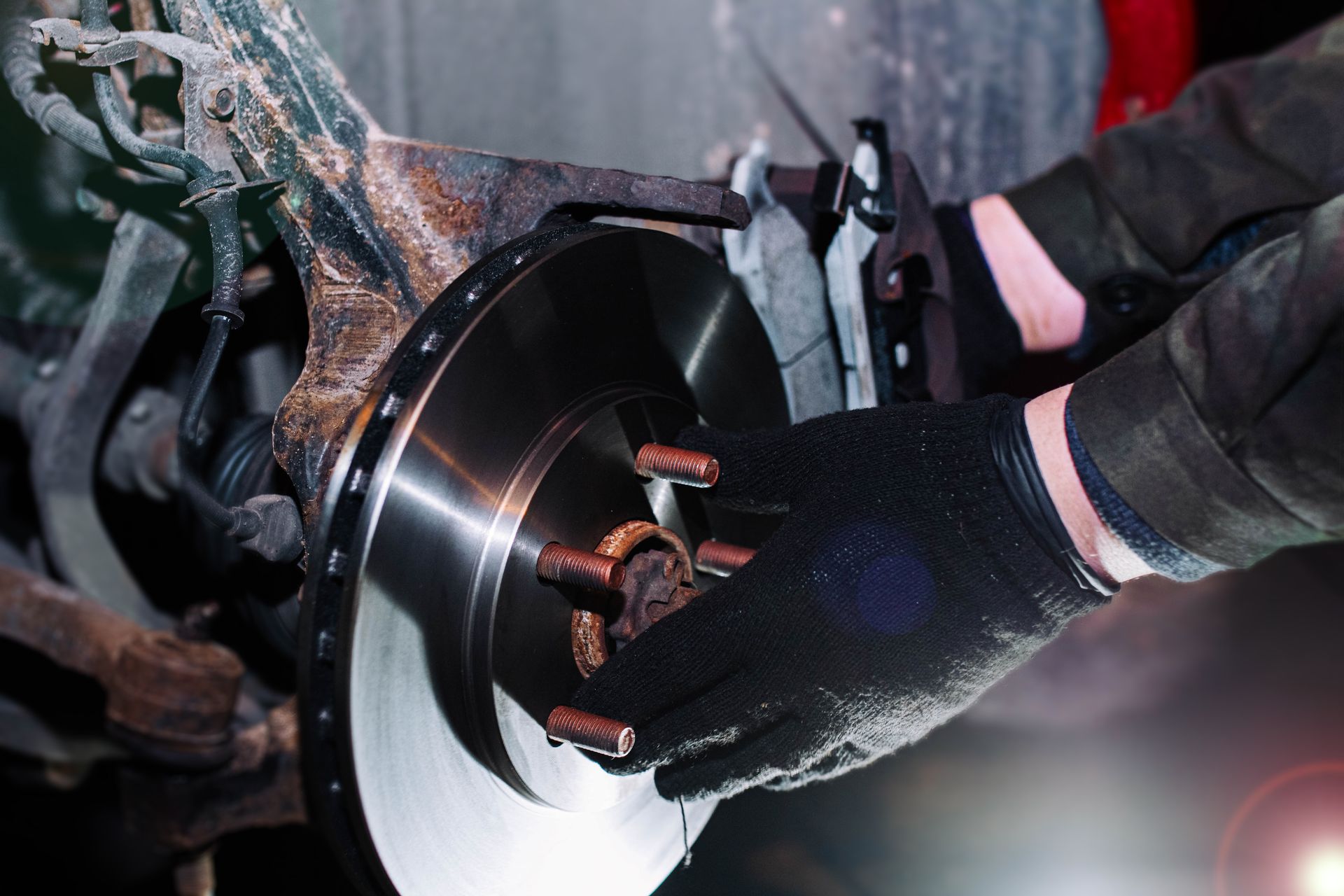
Brake inspection starts with rotor measurement using a micrometer to confirm thickness against the manufacturer's discard specification, followed by visual inspection for heat cracks, hard spots, and surface glazing. Calipers are tested for piston retraction and slide pin movement—binding calipers cause uneven pad wear and rotor overheating even when pads have material remaining. European brake systems, particularly on BMW and Audi platforms, use floating calipers that rely on slide pin lubrication to distribute clamping force evenly across the rotor surface.
After brake repair, pedal feel firms up, stopping distances return to baseline, and rotor pulsation or vibration during braking stops. The vehicle brakes evenly without pulling to one side, and the brake warning light—if it was triggered by low pad sensors—clears once new pads with functioning sensors are installed.
The repair includes only the components that failed measurement or functional testing—if rotors are within spec and free of heat damage, they are resurfaced rather than replaced. If calipers slide freely and pistons retract without resistance, the existing calipers remain in service.
Brake Repair Questions for European Vehicle Owners
Brake system diagnosis on European makes requires understanding how sustained load affects rotor integrity and how caliper design influences pad wear. These questions address what the inspection process reveals and when components need replacement.
What does rotor heat mapping reveal that visual inspection does not?
Heat mapping identifies hard spots in the rotor surface caused by repeated thermal cycling, which create localized high-friction zones that accelerate pad wear and cause pulsation even when the rotor measures within thickness specifications.
How do Conejo Grade descents affect brake rotor lifespan compared to flat-road driving in Thousand Oaks?
Sustained braking on descents generates continuous heat that prevents rotors from cooling between brake applications, causing thermal fatigue that manifests as cracking, warping, or surface glazing faster than intermittent stop-and-go braking on flat roads.
What is the difference between resurfacing and replacing rotors?
Resurfacing removes a thin layer of rotor material to restore a flat friction surface, but only works if the rotor measures above the manufacturer's minimum thickness after material removal—rotors below that threshold must be replaced regardless of surface condition.
When should brake calipers be rebuilt or replaced during a pad and rotor job?
Calipers should be rebuilt or replaced when pistons do not retract fully, slide pins bind despite cleaning and lubrication, or brake fluid leaks from piston seals—any of these conditions cause uneven braking and accelerate rotor and pad wear.
Why do European brake pads wear differently than domestic vehicle pads in Oak Park and Agoura Hills?
European brake systems use softer pad compounds designed to preserve rotor life and reduce brake dust, but these compounds wear faster under high-load conditions like Conejo Grade descents, requiring more frequent pad replacement than harder domestic compounds.
Auto Precision Repair provides system-level brake inspection for European vehicles serving Oak Park and Agoura Hills. Schedule a brake or
engine evaluation to receive rotor measurements and a component-specific repair estimate based on actual wear data.