
Geometry and Component Wear Inspected Together
Suspension Repair in Thousand Oaks for European air and coil suspension systems with alignment-dependent failure patterns
A worn control arm bushing affects alignment angles, and replacing the bushing without measuring alignment leaves the root cause unresolved. Auto Precision Repair inspects suspension geometry and component wear together, using alignment data to identify which components are out of specification and causing tire wear or handling changes. Air suspension systems on Mercedes and BMW, common in the Conejo Valley, fail differently than coil setups and require system-specific diagnosis—air springs leak at different rates depending on how the vehicle is driven and stored, and the compressor cycles more frequently as leaks worsen.
Air suspension diagnosis uses height sensor data and compressor cycle counts to determine whether the fault lies in the air springs, the compressor, the valve block, or the height sensors themselves. Coil suspension diagnosis focuses on bushing condition, ball joint play, and shock absorber damping. Each system type requires different diagnostic procedures, and mixing approaches wastes time and misidentifies the failed component.
Schedule a suspension inspection to receive alignment measurements and a component-specific wear assessment.
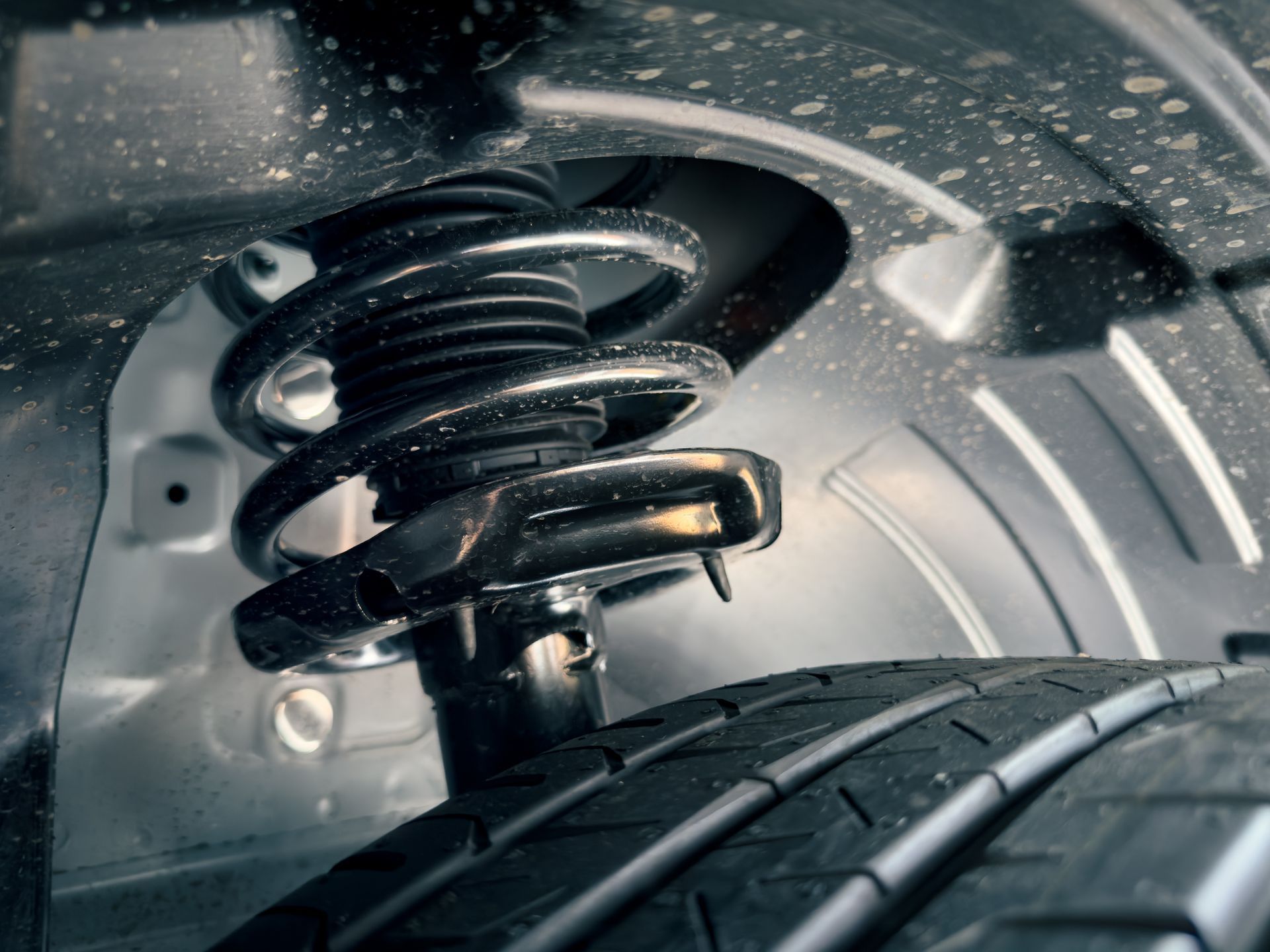
What Suspension Diagnosis Reveals About Handling Changes
Suspension inspection begins with alignment measurement to establish camber, caster, and toe angles, followed by visual and tactile inspection of bushings, ball joints, and shock mounts. Worn bushings allow excessive control arm movement, which shifts alignment angles dynamically under load and causes uneven tire wear. Ball joints are tested for vertical and horizontal play—movement in either direction indicates wear that compromises steering precision and tire contact with the road surface. Air suspension systems are inspected for air spring leaks using soapy water applied to spring bellows and fittings, and compressor cycle frequency is logged to determine how often the system activates to maintain ride height.
After suspension repair, the vehicle tracks straight without steering correction, tire wear patterns normalize, and handling becomes predictable through corners. Air suspension systems hold ride height overnight without sagging, and the compressor cycles only when ride height adjustment is needed, not continuously to compensate for leaking air springs.
The repair includes component replacement based on wear measurement and alignment correction to bring all angles within manufacturer specification. If air springs are leaking, they are replaced along with any failed valve block components, and the system is recalibrated to ensure ride height sensors report accurate data to the suspension control module.
Suspension System Questions for European Owners
Suspension systems on European makes use air springs or coil springs with geometry-dependent handling characteristics, and diagnosing these systems requires alignment data in addition to component inspection. The questions below address what the inspection process measures and when components need replacement.
What does alignment measurement reveal about suspension component wear?
Alignment measurement shows whether camber, caster, or toe angles are outside specification, and the direction and magnitude of the deviation indicate which components are worn—excessive negative camber, for example, suggests worn control arm bushings or a collapsed spring.
How do air suspension systems fail differently than coil suspension systems in Calabasas and Newbury Park?
Air suspension systems fail due to air spring leaks, compressor wear, or valve block faults, while coil suspension systems fail due to bushing degradation, ball joint wear, or shock absorber fluid leakage—each failure mode requires different diagnostic tools and replacement parts.
What is the difference between a shock absorber failure and a spring failure?
A shock absorber failure causes poor damping and bouncing after bumps but does not affect ride height, while a spring failure—either a collapsed coil spring or a leaking air spring—causes the vehicle to sag and alters alignment angles even when the shock absorber is functioning correctly.
When should ball joints be replaced during a suspension repair?
Ball joints should be replaced when vertical or horizontal play exceeds manufacturer specifications, when the boot is torn and contamination has entered the joint, or when alignment angles cannot be brought within specification due to joint wear allowing excessive movement.
Why does suspension geometry affect tire wear patterns on European vehicles?
Suspension geometry controls the angle at which the tire contacts the road, and when camber, caster, or toe angles are outside specification due to worn components, the tire wears unevenly across its tread surface—inside or outside edge wear indicates camber misalignment, while feathering indicates toe misalignment.
Auto Precision Repair provides geometry-based suspension diagnosis for European vehicles in Calabasas and
Newbury Park. Arrange a suspension inspection to receive alignment data and a component wear report with replacement recommendations based on measured tolerances.